I had not used Claude for several months. The reason was straightforward: its CEO has biases against China, and I took it personally and stopped using the product.
Then OpenClaw went viral. Claude 4.6 was released. I reopened Claude, curious to see how much it had advanced.
In two days, I finished two things I had been putting off for months.
Tender Intelligence: From Half a Day to 10 Minutes
We work in engineering procurement and construction EPC. Project opportunities come from a fragmented set of sources, government procurement portals across different countries, large corporates, developers, and multilateral development banks, each with different formats, languages, and update frequencies.
The old approach was manual polling. Once a week, half a day, ending with an Excel sheet sent to colleagues. Things got missed, misread, forgotten.
I had Claude build me a system.
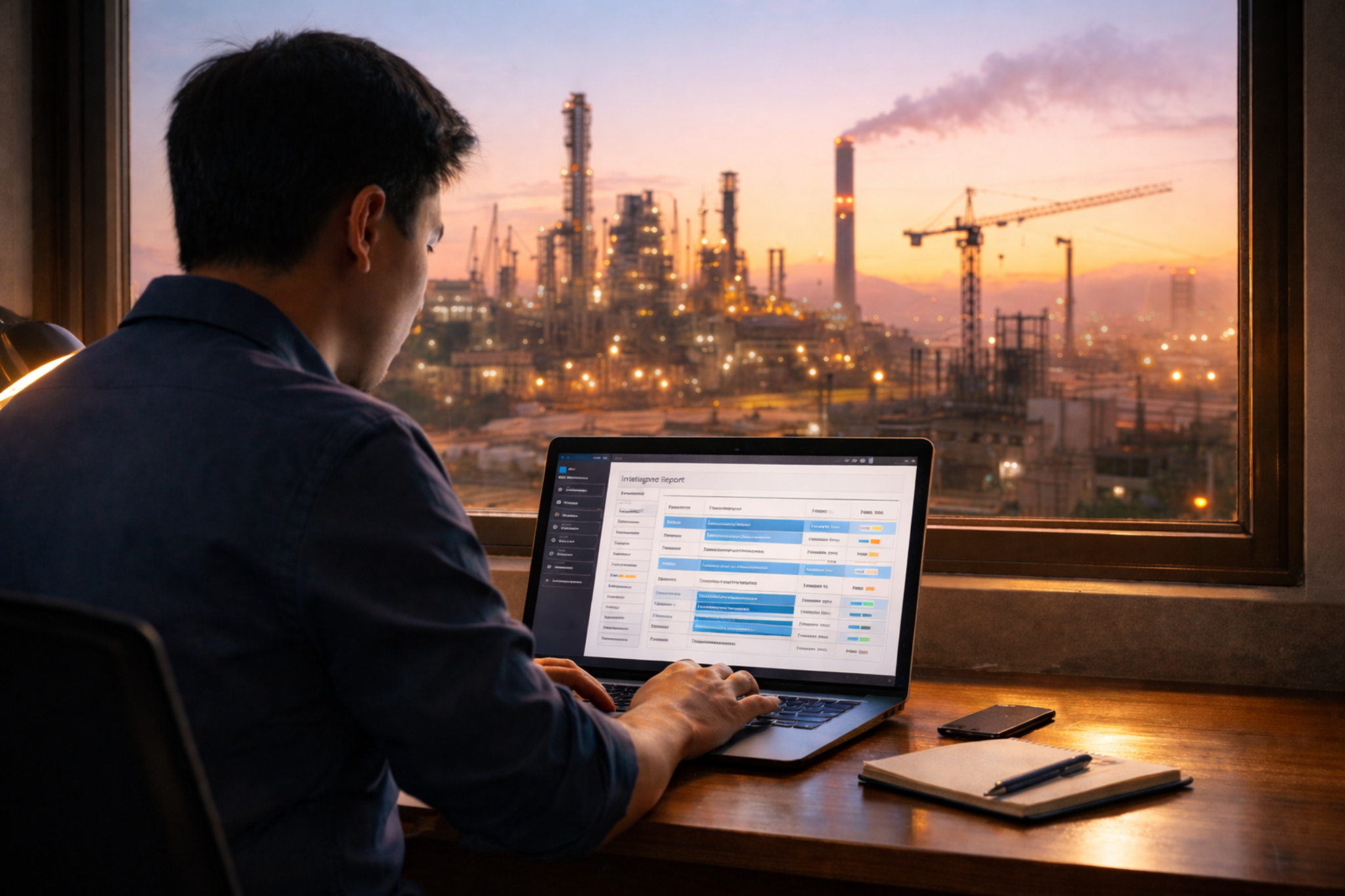
Nothing technically exotic: a SQLite database, a dozen custom collectors for RSS feeds, web scraping, and PDF tender documents, running every 6 hours. The key step is the last one. When generating the weekly report, Claude reads all the articles collected that week, filters against my interest model, and outputs a judgment-based summary rather than a raw link list.
This week's report distilled roughly 200 articles into 7 genuinely valuable project opportunities, each tagged with the relevant institution, country, estimated value range, and project stage.
This used to take half a day. Now it takes 10 minutes to read the report.
Distributor Development: From 3.5 Days to Half an Hour
The other task was robot distributor development. China has a strong industrial robot product line, but going overseas means finding distributors. The original plan was to manually compile a list, research each company, write emails.
I gave Claude the product specification PDF and told it to find distributors ranked by product fit and market priority, then write personalized cold outreach emails.
Claude did not just apply a template. It read each distributor's business description, assessed whether the fit was AMR logistics or industrial inspection, and wrote each email from a different angle.
Then came the LinkedIn part. I used Claude in Chrome, operating directly on LinkedIn pages. Each time I opened a contact's profile, Claude read the page, assessed the person's background and connection status, and gave me real-time advice on whether to send a connection request or a direct message, and what to write.
Work that would have taken 3.5 days was done in half an hour. All contacts processed, all personalized emails written.
Systems, Not Tasks
These two projects made me realize a distinction. Having AI help you do something and having AI help you build a system are completely different things.
What we built is not a one-off script. It is a framework.
The intelligence system has two libraries. The market library tracks industry trends, partner developments, and competitive intelligence. The work library tracks engineering project opportunities. Each runs different collection logic and different report templates, independently.
The distributor outreach has a task framework with defined inputs, outputs, and status at every stage. Built once, reused for the next market or the next product line. Only the data changes.
Claude was the primary tool for building all of it: writing code, reading documentation, making architecture decisions through conversation, without requiring me to understand every line of code behind it.
Above 50%
I work in EPC. I know how heavy this industry is, compliance, site execution, interface management, political risk, logistics. None of it collapses into a prompt.
But the time consumed each week by intelligence gathering, document drafting, business development, and data processing can now be compressed to less than 10% of what it was.
The work that actually requires human judgment gets the attention it deserves.
I think the probability of AI doing EPC is now above 50%.
The author works in EPC across the MENA region and is exploring practical applications of AI in engineering and business development.